
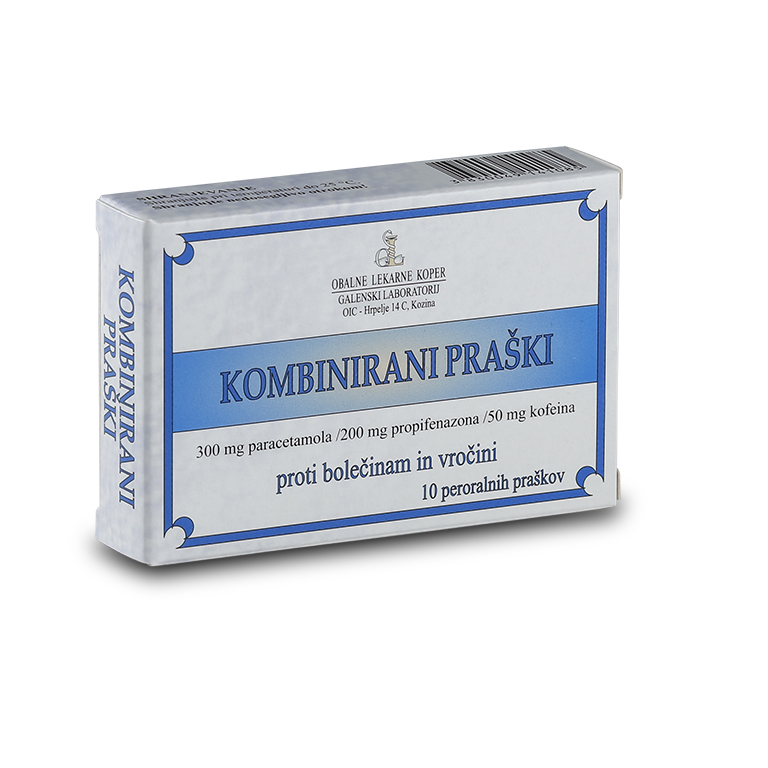
What is Combined Powders and what are they used for?
How Combined Powders work
Combined Powders are a combination of pain-relieving and fever-reducing active ingredients and caffeine. Paracetamol and propyphenazone relieve pain and reduce elevated body temperature, while caffeine enhances their analgesic effect.
When to use Combined Powders
Combined Powders are recommended for the treatment of pain of various origins, such as headache, toothache, neuralgia, postoperative pain and pain following injuries, menstrual pain, joint and muscle pain, and for reducing elevated body temperature associated with colds and flu.
Warnings
Read the package leaflet carefully before using this medicine, as it contains important information for you!
Always use this medicine exactly as described in the package leaflet or as instructed by your doctor or pharmacist.
Keep the package leaflet. You may need to read it again. Ask your pharmacist if you need further information or advice.
If you experience any side effects, consult your doctor or pharmacist. This also applies to any possible side effects not listed in the package leaflet. See the section on possible side effects. If your symptoms worsen or do not improve within one week, consult your doctor.
What you need to know before taking Combined Powders
Do not take Combined Powders:
-
if you are allergic to the active substances or any of the other ingredients of this medicine,
-
if you are hypersensitive to salicylates and non-steroidal anti-inflammatory drugs,
-
if you have severe kidney or liver failure,
-
if you have a congenital deficiency of the enzyme glucose-6-phosphate dehydrogenase (haemolytic anaemia),
-
if you have acute intermittent porphyria (a disorder of porphyrin metabolism),
-
if you are pregnant or breastfeeding.
Combined Powders for pain relief must not be given to children under 12 years of age. Regular and prolonged use may cause kidney damage. Alcoholic and caffeinated beverages should be avoided while taking the oral powders.
Warnings and precautions
-
if you have mildly or moderately impaired kidney or liver function (e.g. due to excessive alcohol consumption or hepatitis),
-
if you have liver damage (e.g. if you have hepatitis or are dependent on alcohol),
-
if you have impaired kidney function,
-
if you have a deficiency of glucuronyl transferase (Gilbert’s syndrome),
-
if you have bone marrow damage,
-
if you have asthma, chronic rhinitis or urticaria, especially if you are hypersensitive to other anti-inflammatory substances,
-
if symptoms persist despite treatment for more than 5 days, or if an elevated temperature persists for more than 3 days, consult your doctor.
Combined Powders are not suitable for long-term treatment. Continuous use of Combined Powders (e.g. to treat headaches) may lead to chronic headaches and permanent kidney damage. Combined Powders reduce elevated body temperature and may therefore mask signs of infection.
Taking other medicines
Tell your doctor or pharmacist if you are taking, have recently taken or might take any other medicines, including medicines obtained without a prescription. You must not take Combined Powders for pain relief at the same time as other medicines containing paracetamol or propyphenazone, as this may cause you to exceed the maximum recommended dose. The effects of Combined Powders for pain relief and certain medicines listed below may increase or decrease due to interactions. The side effects of individual medicines may also become more pronounced.
This may occur when taken at the same time as medicines:
-
used to treat tuberculosis (rifampicin),
-
used to treat epilepsy (barbiturates, antiepileptic medicines),
-
used to prevent blood clotting (acenocoumarol, warfarin),
-
used to regulate intestinal motility (metoclopramide),
-
used to prevent nausea and vomiting (domperidone),
-
used to regulate cholesterol and other blood fats (cholestyramine),
-
used to treat bacterial infections (chloramphenicol),
-
used to treat psychiatric and neurological conditions (lithium, monoamine oxidase inhibitors [MAO inhibitors]),
-
used to treat viral infections (zidovudine),
-
used to treat heart failure (cardiac glycosides),
-
used to treat heart rhythm disorders (procainamide).
Children
Combined Powders must not be given to children under 12 years of age.
Taking Combined Powders with food and drink
Combined Powders can be taken regardless of meals. Alcoholic and caffeinated beverages should be avoided while taking Combined Powders.
Pregnancy and breastfeeding
If you are pregnant or breastfeeding, think you may be pregnant or are planning to have a baby, ask your doctor or pharmacist for advice before taking this medicine. The use of Combined Powders is not recommended during pregnancy or breastfeeding.
Driving and using machines
When used correctly, Combined Powders are not known to have a significant effect on the ability to drive or use machines.
How to take Combined Powders
Dosage and method of administration
Always use this medicine exactly as described in the package leaflet or as instructed by your doctor or pharmacist. If you are unsure, ask your doctor or pharmacist. Unless your doctor or pharmacist advises otherwise, follow these dosage instructions:
The usual dose for adults and children over 12 years of age is 1–2 oral powders up to 3 times a day. Do not exceed the recommended doses. Before taking the powder, dissolve it in a glass of water or tea, or pour it directly into your mouth and swallow with at least 100–200 ml of water. Do not take Combined Powders for pain relief for more than 10 days to relieve pain, or for more than 5 days in children. After this period, consult your doctor about further treatment. Do not take this medicine for more than 3 days to reduce an elevated body temperature. This also applies to children. If you feel that the effect of Combined Powdersfor pain relief is too strong or too weak, consult your doctor or pharmacist.
What to do in the event of an overdose
If you have taken more Combined Powders for pain relief than you should, seek medical attention immediately, even if you feel well. Signs of poisoning may not appear for several days. An overdose may cause nausea, vomiting, rapid heartbeat and dizziness. In severe cases, it may cause convulsions and serious liver damage, which can be fatal.
If you forget to take Combined Powders
Do not take a double dose to make up for a forgotten dose.
Take Combined Powders only when needed for pain or elevated body temperature.
Possible side effects
Like all medicines, Combined Powders can cause side effects, although not everybody gets them. These may include nausea and hypersensitivity skin reactions (rashes, hives and itching). Very rarely, redness, swelling of the throat, difficulty breathing and anaphylactic shock may occur. Very rarely, changes in blood counts may also occur. If any side effect becomes serious, or if you notice any side effect not mentioned in this package leaflet, stop taking the medicine and inform your doctor or pharmacist.
Composition
The active substances are paracetamol, propyphenazone and caffeine. The medicine contains no excipients.
Each oral powder (0.55 g) contains:
-
300 mg paracetamol (Paracetamolum),
-
200 mg propyphenazone (Propyphenazonum),
-
50 mg caffeine (Coffeinum).
Packaging
Paper sachets in a carton, 10 pcs.
Skip the Special offers and benefits section

Special offers and benefits at our pharmacies
View our list of pharmacies